Every minute, 1 million plastic bottles are purchased around the world. Plastic waste is now set to almost triple by 2060, according to the Organisation for Economic Co-operation and Development (OECD). Given the scale of the problem, it’s hardly surprising that the global plastic pollution crisis is so often featured in high-level diplomatic talks. However, these discussions are not just taking place in the corridors of power; they’re also dominating the supermarket aisles.
Consumers are now changing their buying habits to limit the amount of plastic packaging encasing their groceries. A recent consumer study found that 76% of shoppers actively consider the environmental impacts of packaging when making purchasing decisions and over half said they were more likely to buy a product made from carton board or other recyclable materials. The survey, which gathered responses from 5,000 shoppers across the UK, France, Germany, Italy and Spain, conclusively demonstrates the growing demand for sustainable packaging options.
The surge in popularity of liquid cartons is hardly surprising when you consider that they have a far lower carbon footprint than plastic bottles. Life Cycle Analysis research by the Institute for Energy and Environmental Research (IFEU) at Heidelberg found that for 1 liter of fresh milk, cartons contribute 77% fewer emissions than PET bottles and 45% fewer emissions than glass bottles. The savings in emissions and plastic waste is not just seen in controlled studies but also realised in real life. For example, Slovakian dairy firm PD Ďumbier switched its fresh milk and yoghurt products from plastic bottles to Elopak’s Pure-Pak® Sense cartons, enabling the company to reduce its plastic consumption by 80% for chilled beverage packaging.
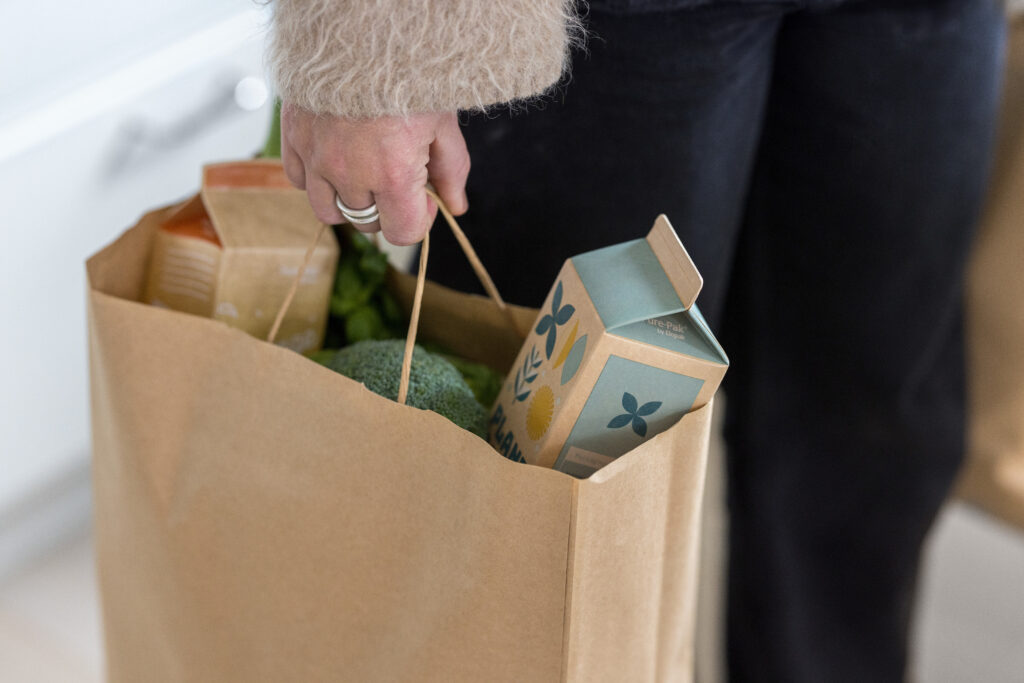
The disparity in emissions between plastic and fiber-based solutions is set to grow as Elopak makes innovations to its packaging design and forges new partnerships to spur research and development. This year, Elopak launched Natural White Board, which offers the same functionality and convenience as our standard white board while reducing greenhouse gas emissions by up to 14%. The board was developed in partnership with Stora Enso and works by incorporating a specialised finishing technique that produces a naturally smooth outer surface, removing the necessity for traditional clay coatings.
At Elopak, we understand that collaboration naturally fosters innovation. This is why we decided to invest in Blue Ocean Closures (BOC), a Swedish technology company that develops fiber-based closures for packaging. As part of the investment, Elopak has secured the exclusive rights to market, sell and distribute worldwide BOC’s molded fiber caps on gable top cartons such as Pure-Pak® and D-PAK™ cartons. Beyond strengthening our R&D capabilities, BOC’s caps could help lower the overall carbon footprint of Elopak’s cartons by reducing plastic content and increasing the use of paper fibers.
While statistics on global plastic pollution are stark, the reality on the ground is far more hopeful. Supermarkets are increasingly being taken over by cartons as the shift from plastic to fiber accelerates. Yes, plastic packaging is still present in our daily lives, but cutting-edge liquid carton innovations have eliminated the need to choose between convenience and sustainability—today’s cartons deliver both, making eco-friendly shopping the easy choice.